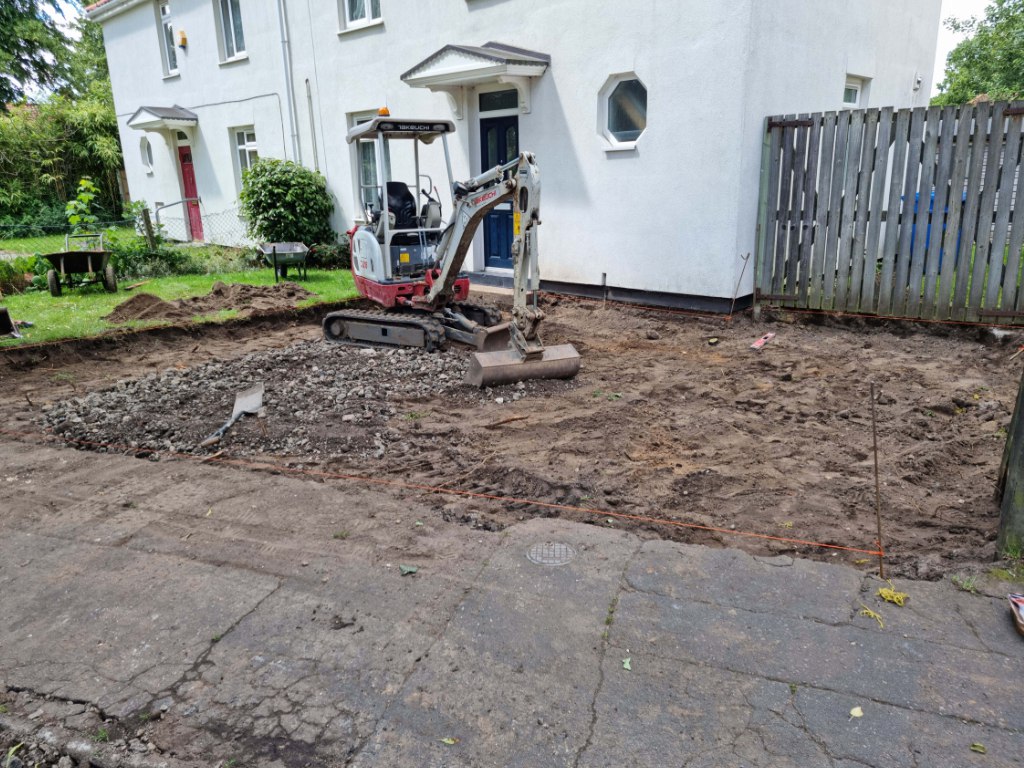
What Makes Block Paving Suitable for Patios With Irregular Shapes?
Not every garden provides a simple square or rectangular space for a patio. Property boundaries can change direction, extensions can create awkward corners, paths may need to connect at different angles, and established garden features can influence the available layout. In these situations, the choice of surfacing material can make a considerable difference to how naturally the finished patio fits its surroundings.
Block paving is particularly well suited to patios with irregular shapes because it is constructed from individual paving units. These can be arranged, cut and detailed to follow unusual boundaries while maintaining a consistent surface. For homeowners in Shortstown, Bedfordshire, professionally installed block paving can therefore provide a practical way to make better use of challenging garden spaces without forcing the patio into a shape that does not suit the property.
Why Does Block Paving Work Well for Irregular Patio Designs?
The flexibility of block paving comes largely from its modular construction. Instead of relying on a small number of large surface sections, a block-paved patio is created from numerous individual units laid according to a planned pattern.
This allows the layout to respond more effectively to curves, corners, changing widths and other features within a garden. However, achieving a well-finished result requires more than simply arranging blocks within the available space. Careful setting out, preparation, cutting, edge restraint and drainage considerations all contribute to the performance and appearance of the completed patio.
Individual Blocks Provide Greater Design Flexibility
One of the main advantages of block paving for an unusually shaped patio is the size of the individual paving units.
Smaller units can be arranged around changes in direction more easily than larger materials. Where a patio narrows, widens or follows a non-standard boundary, the paving pattern can be adapted progressively rather than requiring the entire design to follow a rigid shape.
This can be particularly useful where the available space has several corners or needs to connect naturally with other parts of the garden.
The result can feel intentionally designed for the area rather than fitted into it as an afterthought.
Block Paving Can Follow Changing Boundaries
Garden boundaries are not always perfectly straight.
Fences, walls and existing structures can create angled edges or sections where the width of the available space changes. Trying to impose a completely rectangular patio within such an area can leave narrow strips of unused ground or create awkward transitions.
Block paving can be set out to respond to the actual boundary.
Carefully cut edge blocks allow the finished surface to follow changes in direction while maintaining a defined perimeter. This can make more efficient use of the available garden space.
Awkward Corners Can Become Useful Patio Space
Small corners and recesses are often difficult to incorporate into a patio design.
If they are excluded, they may become narrow areas that are difficult to maintain or serve little practical purpose. With thoughtful block paving design, these spaces can sometimes be incorporated into the main patio.
The paving pattern can continue into smaller sections while carefully planned cuts accommodate the changing shape.
This can help turn an awkward garden footprint into a more complete and usable outdoor area.
Curves Can Be Incorporated Into the Design
An irregular patio does not necessarily need to consist entirely of straight lines.
Curved edges can help a patio respond to lawns, planting areas or the general shape of the garden. Individual paving blocks provide the flexibility to create these transitions through careful setting out and cutting.
The quality of the edge detailing becomes particularly important with curved designs. Poorly planned cuts can make the perimeter appear inconsistent, whereas accurate installation creates a deliberate and well-defined finish.
This is one area where professional preparation and workmanship can have a significant effect on the final appearance.
Different Paving Patterns Can Suit Different Shapes
The laying pattern influences how block paving looks within an irregular space.
Some patterns can emphasise the direction of a patio or path, while others can help create visual consistency across areas that change width or direction. The choice should therefore take account of the shape of the space rather than being considered separately from it.
Careful planning can also reduce awkward cuts and help the pattern flow naturally through corners and transitions.
For complicated patio shapes, setting out the paving correctly from the beginning is particularly important because small alignment errors can become much more noticeable as the installation progresses.
Block Paving Can Connect Patios and Paths Naturally
Many garden layouts require more than a standalone seating area.
A patio may need to connect with a pathway leading to another part of the garden, wrap around the property or provide access to several areas. These connections can create changes in width and direction that make the overall surface irregular.
Block paving can be particularly effective in these situations because the same material can continue through different parts of the layout.
A carefully designed transition between the main patio and adjoining paths can make separate functional areas feel like parts of one coordinated landscape.
Existing Garden Features Can Be Considered
Sometimes the irregular shape of a patio is created by features that are intended to remain.
Established planting areas, walls, steps or other garden elements may influence where paving can be positioned. Rather than removing these features simply to create a conventional rectangular surface, the patio can sometimes be designed around them.
Individual blocks can be cut and arranged to accommodate carefully planned boundaries.
The important point is that these details should be incorporated into the design from the outset. Trying to adjust the paving around an unexpected feature during installation can result in awkward cuts and inconsistent edges.
Edge Restraints Are Especially Important
The perimeter of a block-paved patio plays an important structural role.
Individual paving blocks rely on suitable edge restraint to help maintain their position. On a simple rectangular patio, the perimeter is relatively straightforward. Irregular designs can involve numerous changes in direction, making careful edge construction even more important.
Every curve, corner and angled section needs to form part of a stable overall boundary.
Good edge detailing helps the paving retain its intended layout while also providing a clean visual transition between the patio and surrounding garden.
Proper Ground Preparation Remains Essential
The flexibility of block paving does not reduce the importance of what lies beneath it.
A patio needs suitable ground preparation and a properly constructed base to provide consistent support. If preparation varies across an irregular area, sections can behave differently over time.
This is particularly relevant where the patio extends into previously unused parts of a garden or crosses areas with different existing ground conditions.
Professional preparation creates a consistent foundation across the entire footprint, including narrow sections, corners and transitions that can otherwise be overlooked.
Drainage Should Be Planned Around the Complete Patio Shape
An irregular patio requires careful consideration of how surface water will move.
Changes in shape do not remove the need for suitable falls. Water should be considered across the entire paved area so that awkward corners or wider sections do not inadvertently become places where water collects.
This needs to be planned before installation rather than corrected once the paving is complete.
The shape of the patio, existing ground levels and its relationship with surrounding garden areas all influence how the finished surface should be constructed.
Borders Can Help Define Complicated Shapes
Borders can be particularly effective on irregular block-paved patios.
A contrasting orientation or carefully positioned perimeter course can visually define the shape and create a clean separation between the main paving and neighbouring lawn or planting.
Borders can also help emphasise deliberate curves and changes in direction.
Rather than trying to hide an unusual patio footprint, good detailing can make its shape an intentional part of the design.
Irregular Does Not Have to Mean Complicated
An unusual garden shape does not necessarily require an overly complicated patio design.
In many cases, the most successful solution is one that responds simply to the available space. A well-planned block-paved surface can follow important boundaries and accommodate necessary changes in direction without introducing unnecessary features.
The objective should be to create a patio that is comfortable to use, visually balanced and well connected to the rest of the garden.
Block paving provides design flexibility, but that flexibility is most valuable when used with careful planning.
Why Professional Installation Matters
Irregular block paving requires accurate setting out and attention to detail.
The base must provide consistent support, the paving pattern needs to remain aligned, individual blocks may require precise cutting, and edges must be properly restrained. Drainage also needs to work across the complete surface.
Small inaccuracies can become particularly noticeable where paving meets angled boundaries or curves.
Professional installation brings these considerations together so that the finished patio does not simply fill an unusual space but looks as though it was designed specifically for it.
Block Paved Patios in Shortstown, Bedfordshire
At Shortstown Driveways & Patios, we understand that gardens do not always provide straightforward spaces for new patios. Irregular boundaries, changing widths and existing features can all influence the most suitable layout.
A carefully planned block paving installation can respond to these characteristics while creating a practical and well-defined outdoor surface. From preparation and setting out to cutting and edge detailing, each stage contributes to how successfully the patio fits the available space.
For homeowners in Shortstown, a professionally installed block-paved patio can make effective use of garden areas that may otherwise be difficult to incorporate into a practical layout.
Conclusion
Block paving is particularly suitable for patios with irregular shapes because individual paving units provide considerable flexibility in how the surface can be arranged. Curves, angled boundaries, awkward corners, changing widths and connections to garden paths can all be accommodated through careful planning and installation.
However, the blocks themselves are only part of a successful patio. Accurate setting out, suitable ground preparation, secure edge restraints, considered drainage and precise cutting are equally important to achieving a dependable and attractive result.
If you are considering a new block-paved patio for an irregular garden space in Shortstown, Bedfordshire, contact Shortstown Driveways & Patios. We can assess the available area and recommend a practical layout designed to work naturally with your garden.
Call us on: 01234 395 493
Click here to find out more about Shortstown Driveways & Patios
Click here to complete our contact form and see how we can help with your driveway needs.